


New York City’s Charter sets up the Mayor, the Council and City agencies. It also gets into the process for putting a bench on the sidewalk.
That is a strange range of things to put in one governing document, and it raises a question: which rules should be carved in stone in the charter, and which should we be able to adjust as we learn what works?
It is a life goal of mine to work on a Charter Revision Commission, so I always love this time of year. I spent a lot of time with the Commission on Government Efficiency’s (COGE’s) proposals. Most voter guides simplify the issues as many people are in a rush and don’t have the prerequisite knowledge to understand the changes. I took the time to scrutinize these changes. Who decides? Who gets to give input? Who can stop something? And what happens if we take one of those steps away?
I’m voting yes on all five proposals, but for different reasons and with different reservations. This post is the short version of my analysis, I will be giving my analysis overviewing each proposal. My attached video, by far my longest ever, goes through the current processes and the proposed changes, chapter by chapter, if you want to get into the mechanics with me!1
The rulebook
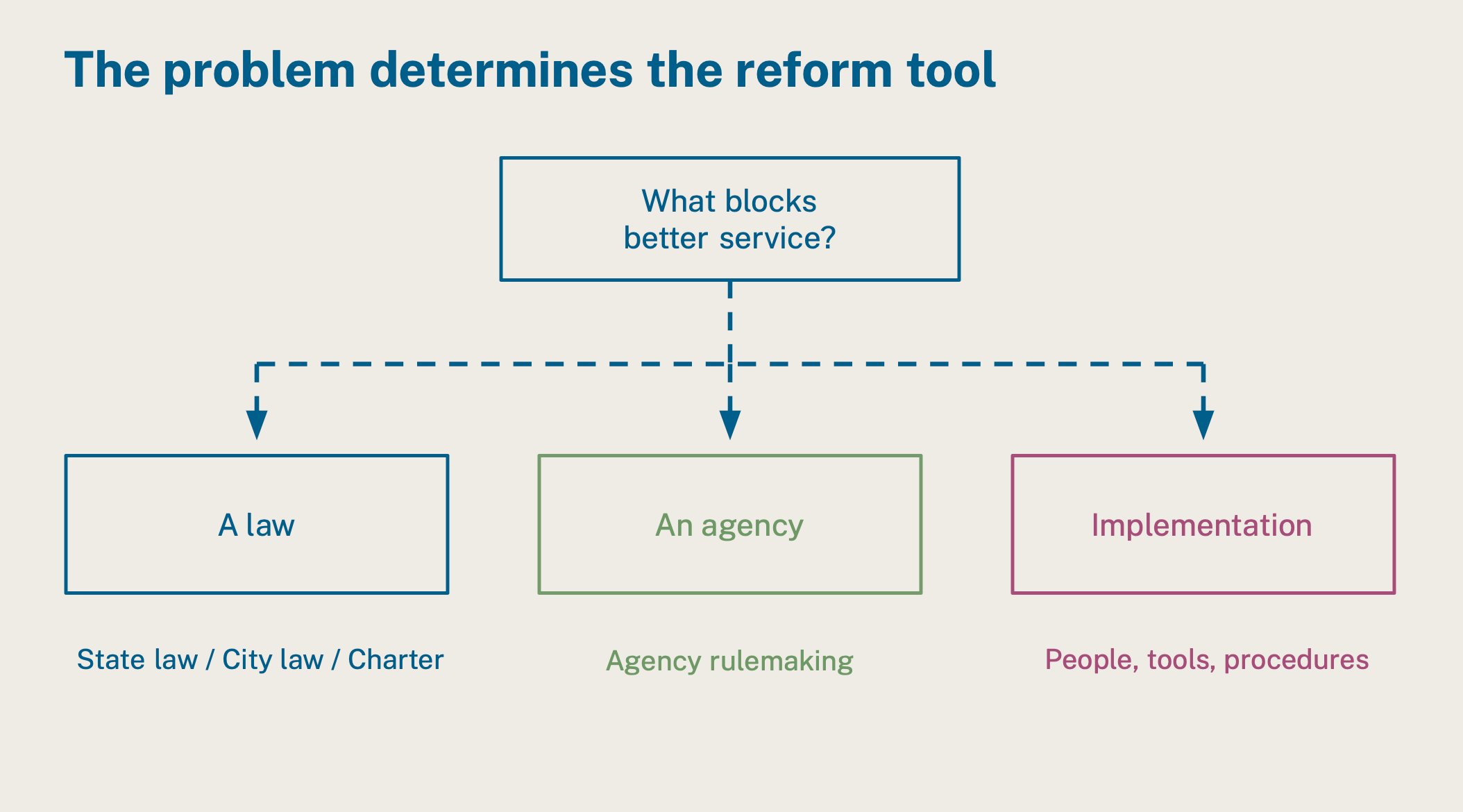
Only some problems sit in the NYC Charter which means a Charter Revision Commission can only fix certain things. Many more inefficiencies involve state law, Council legislation, agency rules or the actual operation of an agency. Charter changes are specifically relevant to city procedures, so that is what COGE looked to streamline. It’s easy to think that speed and efficiency are at odds with accountability. However, if we apply the lens of asking what problem a step is trying to solve, we might find that it didn’t do its job to begin with.
Q1. Public space: Why is it so hard to put a bench outside?
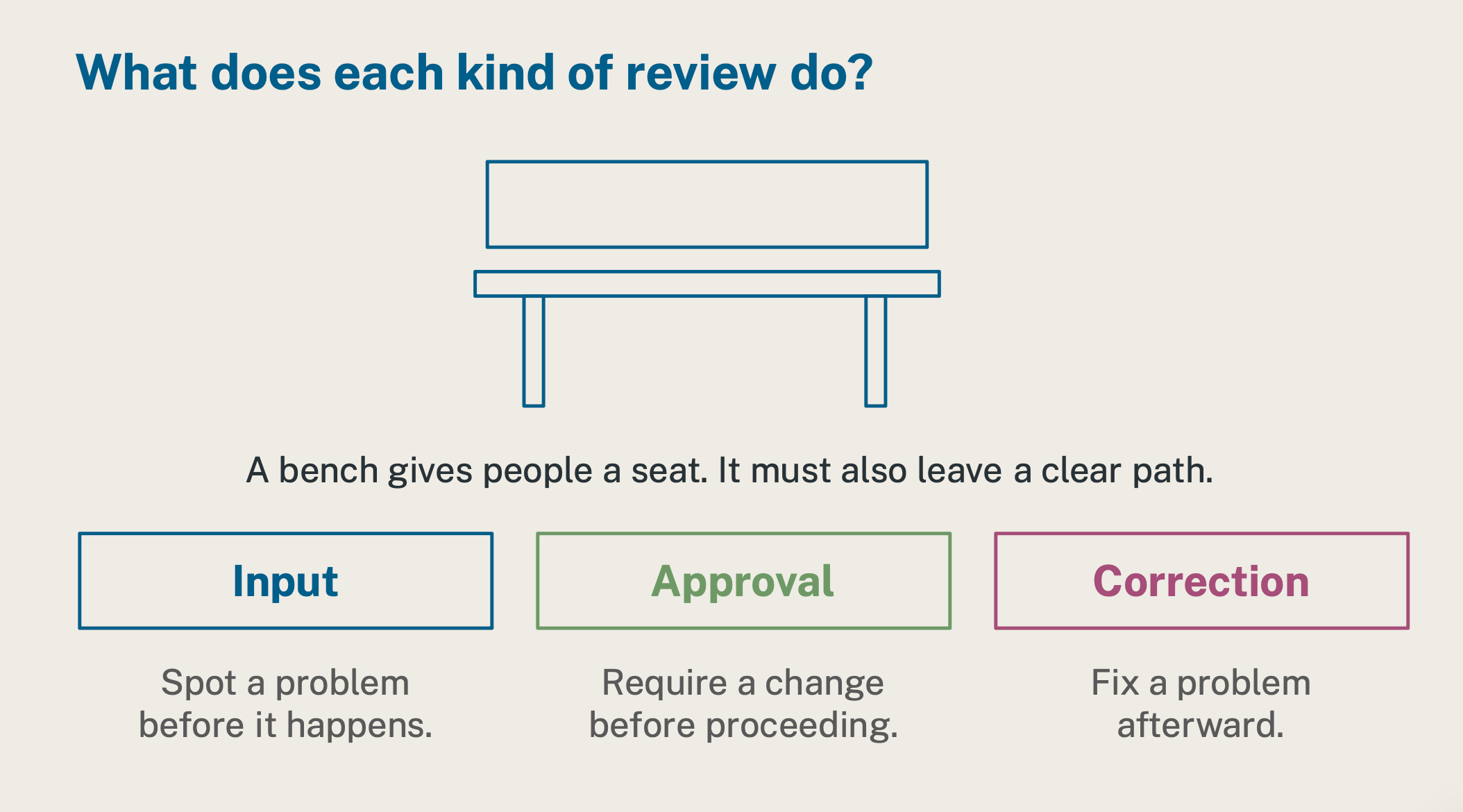
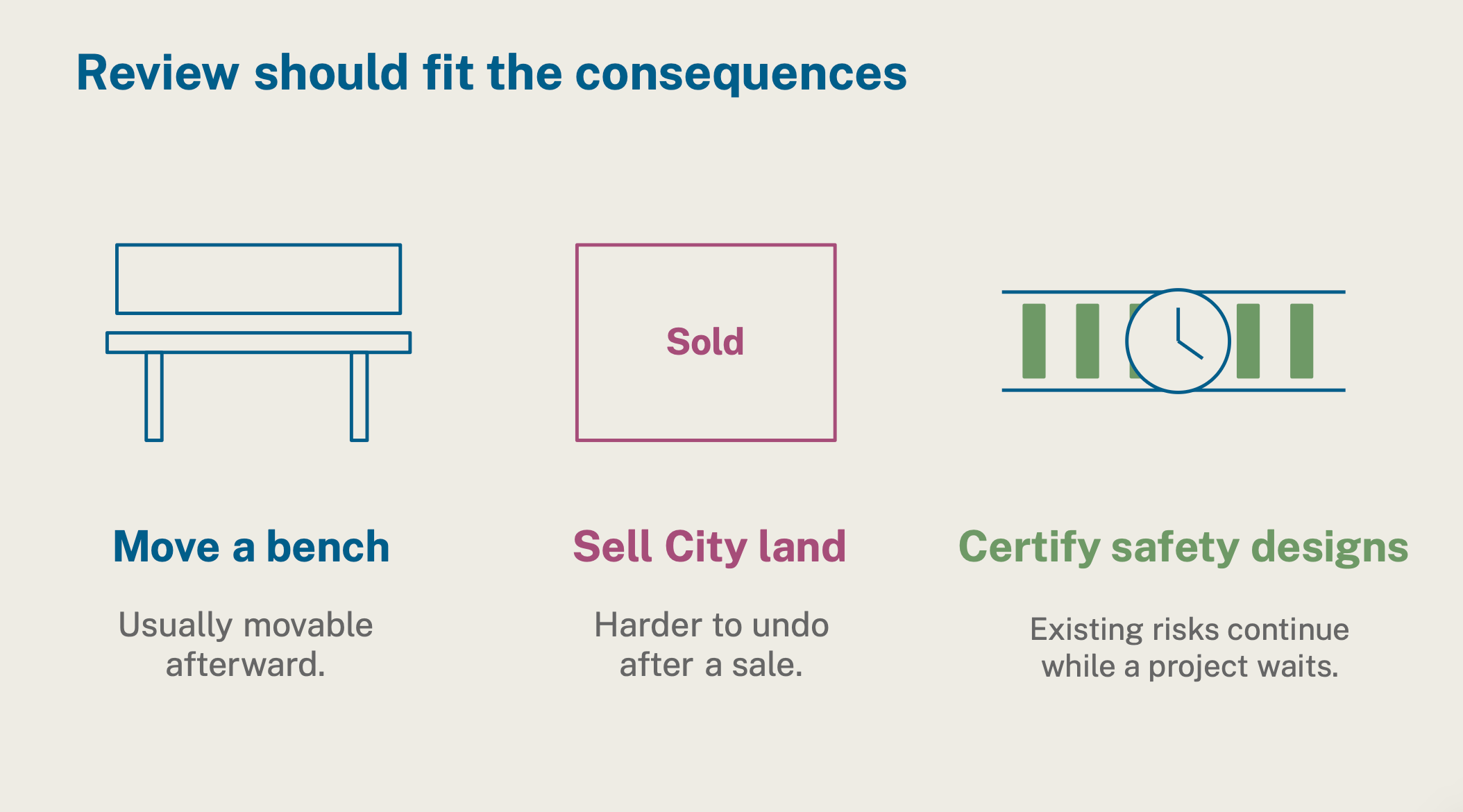
A bench on the sidewalk can give people somewhere to sit, but it can also block a walkway or someone’s entrance. The purpose of public review is to spot problems like this and recommend or require a change. This requires public review to actually reach people who could provide input. However should public review be mandatory in situations where the potential consequences are small and the change is easy to undo? Who should have discretion to decide what situations this applies to?
Question 1 would streamline the process for getting permission to use public space, including benches and outdoor dining. I support having a more manageable process that maintains accessibility and safety protections. Making a hearing discretionary in the Charter still leaves room to hold one when it would help. The handling of individual applications still matters even though the baseline has changed. This will lower the barrier to entry for non-contentious projects while allowing review to scale with the potential impact. I do support having a more vibrant streetscape, but I am assessing this proposal based on its procedural merits not its specific outcome.
Video Section - Public Voter Guide
Q2. Procurement: Spend time on the checks that matter.
Procurement is how the City buys goods and services, and currently this involves a LOT of paperwork. Much of this developed for good reasons: whether its Tammany Hall or the Parking Violations Bureau scandal of 1986, city contracting is notorious for its potential for graft. I want the City to know who it is giving money to, but small businesses should be able to work with the City without spending unnecessary hours answering questions that have little to do with its contract. The city being competitive in the marketplace only results in better deals for taxpayers.
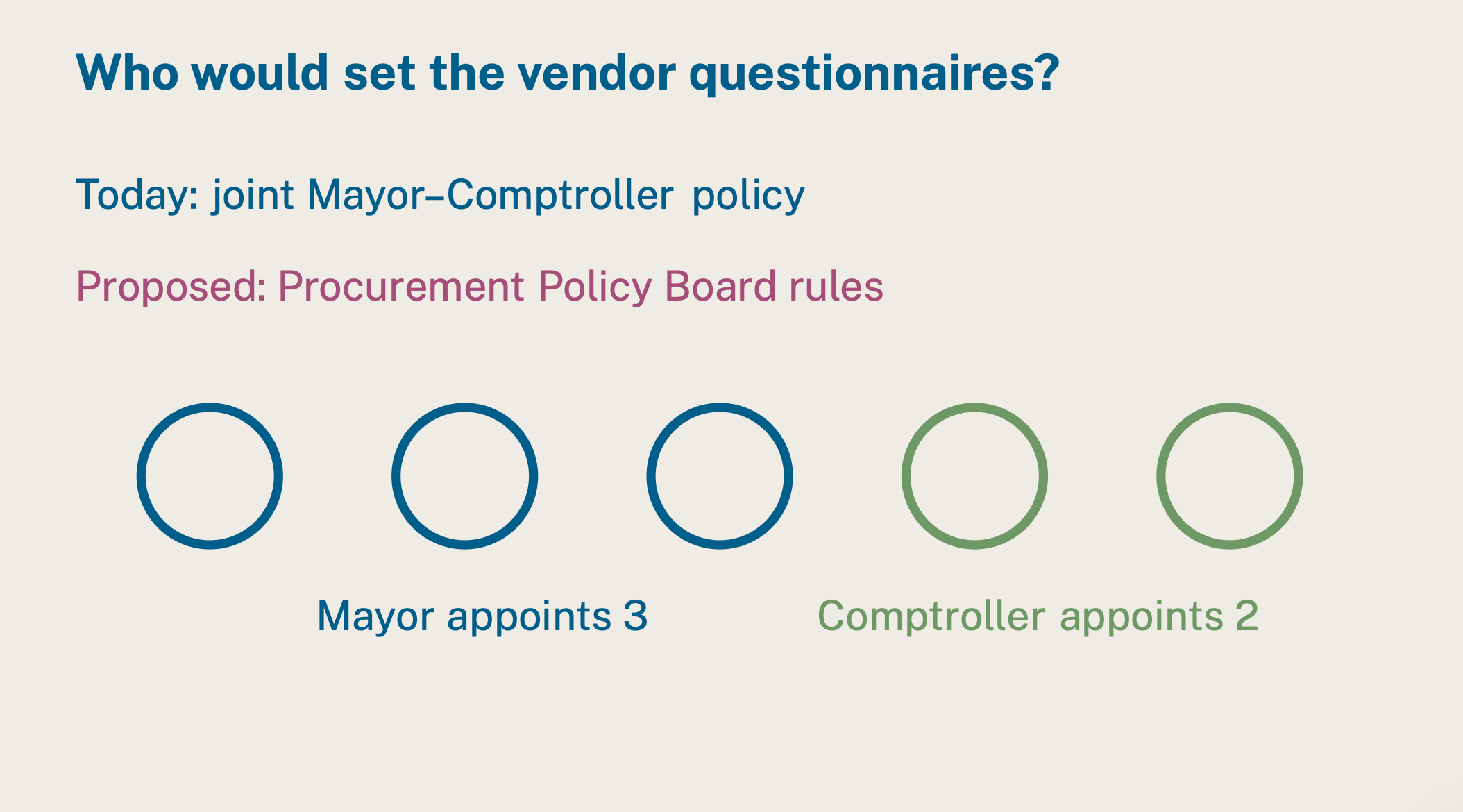
Question 2 combines changes to paperwork, delegated approvals and public review. It gives the Procurement Policy Board (PPB) rulemaking authority over things already in the subject-matter it regulates, but the rules the PPB writes afterward will determine how much of the promised improvement applicants actually experience. It remains to be seen to me whether this is a slight tip in the favor of mayoral power, given the majority of the PPB is mayoral appointments.
Video Section - Public Voter Guide
Q3. Streets and City property: one vote with several decisions
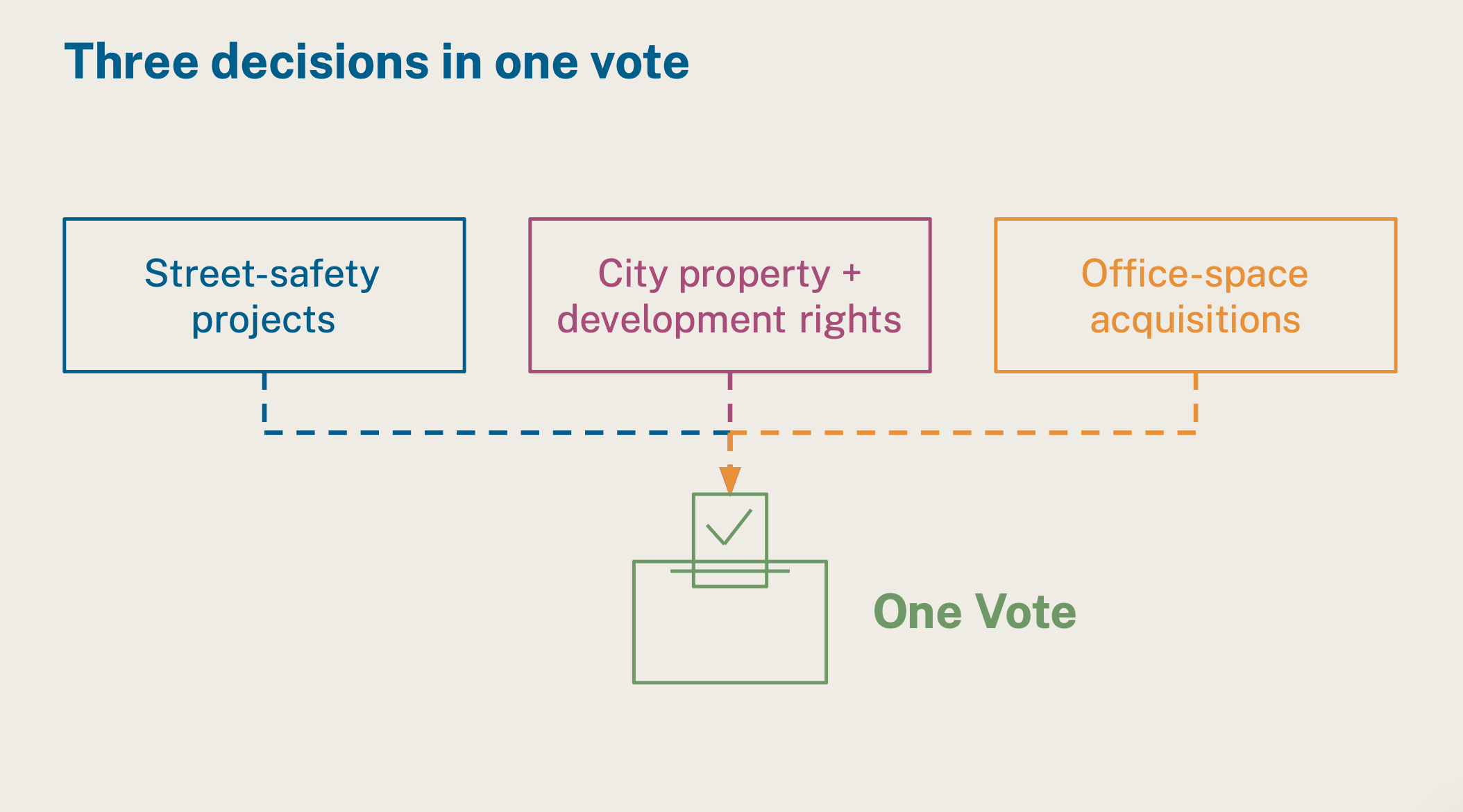
This is the bundle I find hardest to defend as a single ballot question. Street-safety projects, City property and office acquisitions raise different questions and you could reasonably support some changes and oppose others, but still get one vote. While it is true of all of the ballot questions that they include multiple changes, they are generally within the same subject area.
I’m voting yes on the merits of each proposal, but with reservations about the packaging. The changes subtly shifts many approval and veto powers. For street projects, the requirement of certification but removal of legal consequences for neglecting to do so make a confusing grey area, absent some information that I am missing. For City property, faster permission to dispose of land is not the same thing as completing a sale or a development nor does a simpler process force the city to use it. It does open new doors for DCAS and unlocks new trapped revenue which is good. Removing the City Planning Commissions role in office-acquisition approval is a real shift in who can stop a transaction, even when there is a good case for reconsidering that approval.
I question whether the City Planning Commission ever needed that veto over every covered office acquisition. That does not mean an office move has no neighborhood effects but the review should fit the decision and private offices do not need land use approval to move.
Video Section - Public Voter Guide
Q4. Building permits: a better entrance to the same maze?
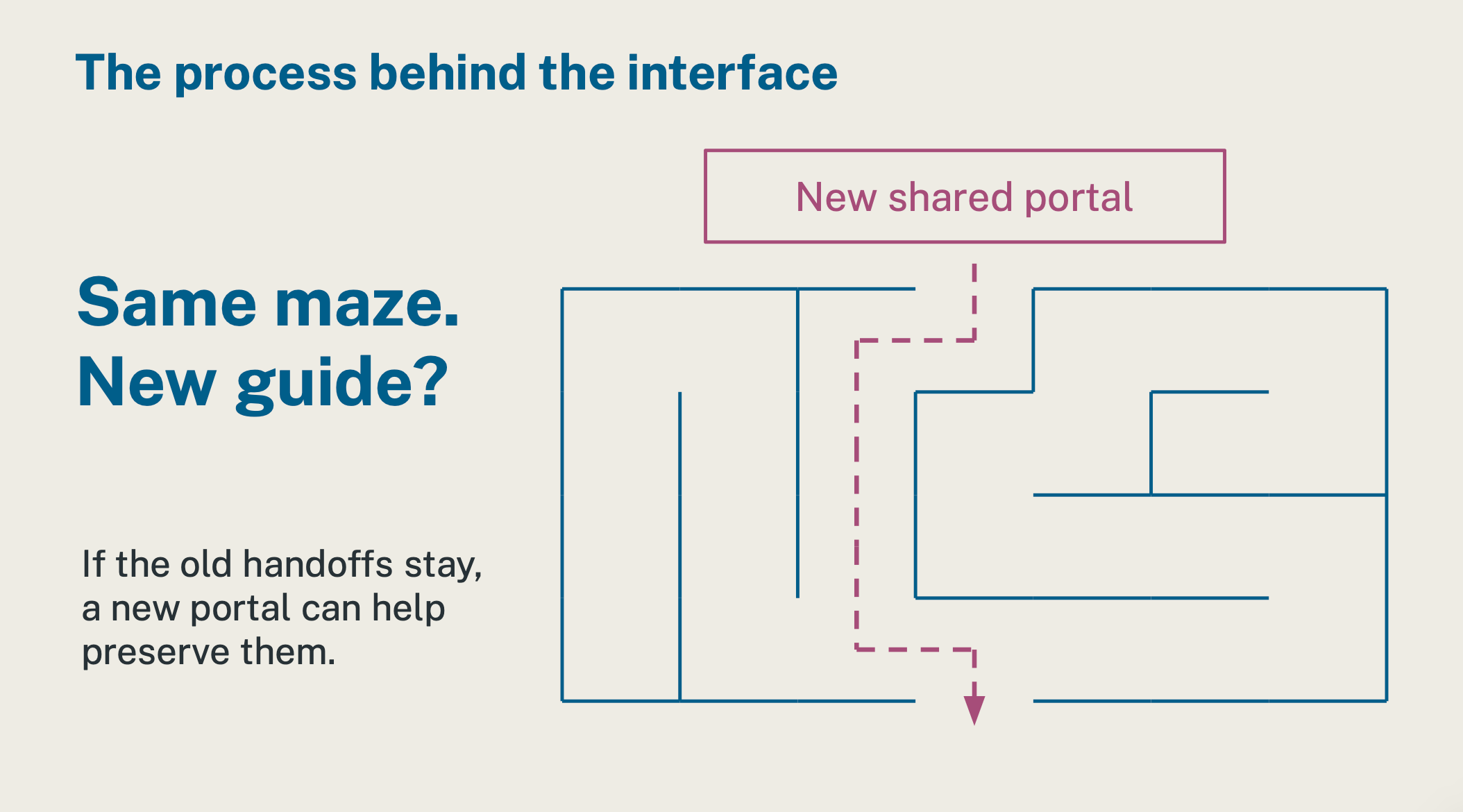
When you’re building in NYC, different agencies handle different pieces. Creating a shared front door could make that much easier to navigate, however it would not by itself make the underlying requirements any simpler. In fact, if we put software over old handoffs without examining them, we could preserve the confusion in a much more expensive form. A better portal is a useful first step but the process of developing the portal needs to be used to identify duplicative work and meaningfully escalate needed changes to whoever has authority to make them.
Video Section - Public Voter Guide
Q5. Reserves: keep services running when revenue falls
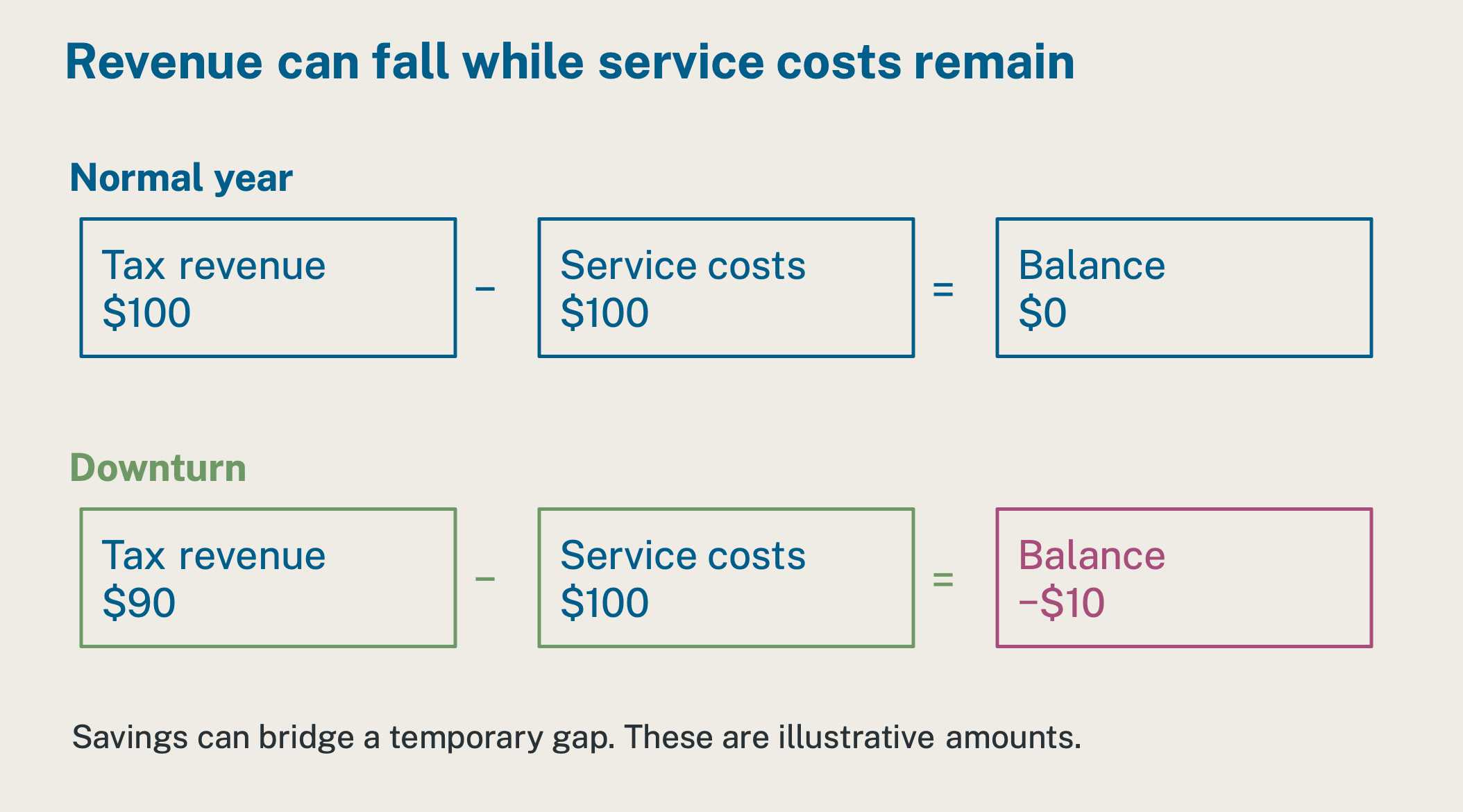
A recession does not mean we need fewer teachers or sanitation workers. In fact, it often mean greater fiscal needs just as the City has less money coming in. Savings help keep that revenue shock from turning immediately into service cuts, given the city’s mandated balanced budget requirement.
The City already has a rainy day fund. Question 5 is about the target and the rules for building reserves. If approved, the deposit methodology the city develops would have to be followed, but subject to appropriations meaning no money could be put in. The tension between flexibility in budget allocation and the need for consistent investment is difficult to navigate. The ballots definition of a combined reserve target also needs explanation because it’s flexible definition of a rainy day fund means money restricted to retiree health benefits is interchangeable with money available for a general budget gap. Just counting it in a methodology would not remove those restrictions.
I’m voting yes because I think a published saving rule can create useful pressure to save. Whether it will produce enough savings is to be seen, but it can be strengthened if so. People who want a stronger fund can reasonably disagree with me about whether these rules are strong enough.
Video Section - Public Voter Guide - CBC’s Statement Against Q5
What I’m taking away
I learned a lot from digging into these proposals. Thinking about the purpose of a step in public review has unveiled a few core questions. What does a step catch? Who is accountable when it goes? Is there is a way to fix a bad decision?
Moving a bench and recovering land the City has sold are very different problems. The scale of the check should reflect what could go wrong, who bears that risk and how reversible the decision is. The underlying tension is that waiting for a review carries risks too because the status quo isn’t neutral: a street-safety project stuck in review has consequences for the people using that street.
I’m voting yes on all 5 proposals, but you don’t have to agree with my votes to think through those questions with me. I’d love to hear which of these changes you would handle differently or any interesting tradeoffs you identified.
Sources and further detail
NYC Govs official nonpartisan NYC Votes resource.
Citizen’s Budget Commission statement on Proposal 5


For overviews, see Tal Roded's Article or NYC Govs official nonpartisan NYC Votes resource.